
Posted:
6 September 2026
Hear from expert CREST Awards assessor Ella White

Ella White, an Associate Editorial Manager at the Royal Society of Chemistry, has been a CREST Awards assessor for five years.
In this special guest blog Ella shares how, through her academic background and work, she has developed expertise in assessing Silver and Gold CREST projects that explore topics from across the STEM spectrum.
Ella offers guidance to students on how to submit a successful Silver or Gold CREST project, and how to effectively showcase the skills and experience they developed by achieving a CREST Award on their UCAS forms and CVs.
-------------
Author: Ella White
Having a bachelor's degree in Chemistry and a master’s degree in Catalysis: Chemistry and Engineering gives me the ideal skill set to assess CREST projects with a chemistry focus; I’ve had the pleasure of reviewing some incredibly creative and innovative projects.
But my expertise isn’t solely in chemistry. Through my university studies and previous professional experience I’ve developed knowledge that allows me to confidently review work in other topic areas, such as biology, physics and engineering too.
In my role as an Associate Editorial Manager at the Royal Society of Chemistry, I evaluate scientific literature and make decisions based on scope, novelty and impact. Working with high‑quality STEM research every day directly informs how I assess CREST projects, helping me recognise strong scientific thinking and well‑structured investigations across a wide range of topics.
I thoroughly enjoy my role as a CREST assessor - the calibre of work submitted never fails to impress me. Over the years I’ve noticed several common themes in successful Silver and Gold Awards applications. Here are three key pieces of guidance to help your submission stand out:
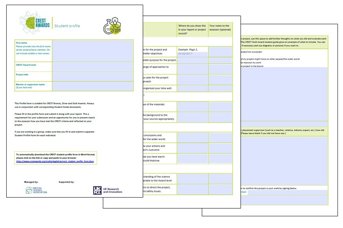
Use the Student Profile Form effectively
The Profile Form is your chance to clearly signpost where you’ve met each assessment criterion. As assessors, we rely on it to understand your thought process and the decisions you have made while carrying out your research. A fully completed form that explains where and how you’ve met each criterion makes your submission much easier to assess, and ensures your hard work is fully recognised.
Provide detailed discussion and reflection
Many Gold submissions include all the required criteria, but some fall short because the explanation lacks depth. Gold-level work requires clear reasoning, thoughtful reflection, and well explained decision‑making. Silver projects often describe what was done, whereas, Gold projects explain why choices were made, how problems were solved, and what was learned. If you’re aiming for a Gold Award, make sure you expand on each criterion with detailed explanation and justification.
Fully answer each criterion
I often see projects where students have only addressed part of an assessment criterion. For instance, when you’re concluding your research you not only need to summarise and evaluate your project, you also need to explain the implications of your research on the wider world. Before submitting your work, take time to read through each assessment criterion and check that you’ve clearly answered it in full. This final review step is crucial as it ensures your project is complete, coherent, and demonstrates the full range of skills and understanding required for a strong submission.
Include your CREST Award in your UCAS personal statement
A CREST Award doesn’t just give you the chance to explore a topic in science or technology that you’re passionate about, it also helps you develop a wide range of transferable skills that will benefit you long after your project is finished. From independent research and critical thinking to communication and project management, these are exactly the kinds of skills universities value.
Because of this, CREST Awards are recognised as impressive achievements by universities. This UCAS guide even highlights CREST as an example of relevant work experience. Including your CREST Award in your personal statement is a great way to demonstrate curiosity, commitment and determination, qualities admissions tutors consistently look for.
When writing your personal statement or preparing for an interview, try to draw out the specific strengths your project demonstrates. For example, you might highlight:
- Your passion: why you chose your topic and how the project deepened your interest in the subject you’re applying for.
- Your process: how you planned your investigation, managed your time effectively and overcame any challenges.
- Your skills: what skills you have developed throughout your project.
Having been through the process myself, I know how difficult it can be to find work experience in a specific scientific field. A CREST Award offers a fantastic alternative as it showcases your enthusiasm, independence, and your readiness for further study.
Include your CREST Award on your CV
As well as being a fantastic achievement to include in your UCAS application, a CREST Award has much broader value as it’s something you can showcase on your CV as well. The transferable skills you develop throughout your project don’t just support your academic journey, they’re also highly attractive to future employers, whether the role is STEM related or not.
A CREST Award gives you the chance to demonstrate qualities that are difficult to show through standard schoolwork alone. Employers consistently look for evidence of initiative, problem‑solving, teamwork, communication and resilience, all of which naturally emerge during a CREST project.
In my own role, I’m involved in a lot of recruitment, and these are exactly the kinds of attributes I look for when selecting candidates for interview. Completing a project from start to finish shows that you can plan and organise your workload, manage your time effectively, adapt when things don’t go to plan, and produce a substantial piece of independent research. Whether you’re applying for part‑time work, internships, apprenticeships or future STEM roles, your CREST Award helps you stand out as someone who can work independently, think critically and follow a project through from start to finish.
When adding your CREST Award to your CV, you can highlight:
- Project management – taking responsibility for a long‑term task shows you can plan your workload, set goals and stay organised. This is a valuable skill for part‑time jobs and any situation where you need to manage your time independently.
- Research skills – gathering information, analysing data and drawing conclusions demonstrates that you can investigate a topic thoroughly and make evidence‑based decisions. These skills are essential and highly valued in many careers.
- Problem‑solving - explaining how you overcame challenges or unexpected results shows resilience and adaptability. Employers look for people who can stay calm, think logically and find solutions when things don’t go to plan.
- Communication - presenting your findings clearly and confidently helps you demonstrate that you can explain complex ideas in a way others understand. This is important for interviews, teamwork, presentations and almost every workplace setting.
- Teamwork or independence - whether you collaborated with others or worked independently, your project shows you can either contribute effectively to a group or take initiative on your own. Both are valuable skills that help you succeed in employment and everyday life.
These points help you show employers not just what you did, but what skills you developed throughout your project. These are skills you’ll continue to use in everyday life, from managing personal projects to navigating future academic and professional challenges with confidence. Therefore, CREST Awards offer far more than a single project they help you build confidence, independence and a genuine love of your chosen field.
Find more information about Silver and Gold CREST projects in the CREST help centre
Other news and case studies
 Case studyPosted:20 January 2023
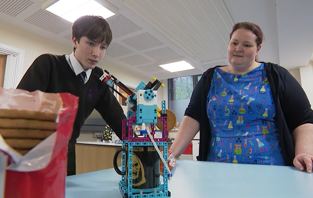
Biscuit dunker for a CREST Award!
 Case studyPosted:4 April 2023
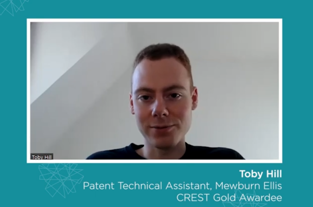
CREST Awards can boost UCAS applications
 Case studyPosted:10 October 2023
Hearing youth voice on mental health
 Case studyPosted:3 April 2025
CREST Awards for international students
 Case studyPosted:4 December 2024
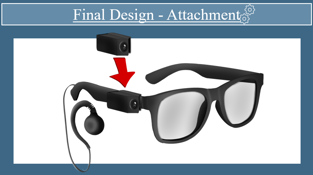
Linking AI & healthcare - a Gold case study