Posted:
2 July 2026
Inspiring early years learners with a CREST Star Kit Box
Research shows that practical, hands-on science learning in early years settings “is an effective strategy for science teaching and learning, as groundwork for future science literacy of kindergarten children”.
All teachers would love to give their little learners the opportunity to build a strong foundation in STEM* learning, but there are lots of barriers to doing practical activities and experiments in classrooms.
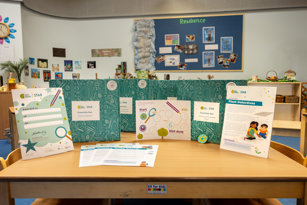
Tight budgets, not enough access to materials or time for planning, and a lack of teacher confidence can all present obstacles. To help support teachers overcome these issues and deliver this type of education, we send out CREST kit boxes to schools in challenging circumstances, which contain everything needed to run primary activities and earn Star or SuperStar CREST Awards.
Samantha Sweetman, the Science Lead and Year 5 teacher at Riverside Primary School in Hereford, received a Star Kit Box, funded by The Royal Commission for the Exhibition of 1851, which she ran with the children in the nursey class at Riverside.
Samantha spoke to us about the importance of starting children’s STEM journey from a young age, how handy and inclusive the Kit Box was, the benefits of inviting families to join the CREST activities, and more.
“A lovely opportunity for me to work with a different year group”
CREST Star Kit Boxes contain activities that can be run with children aged 3-7, so this made a nice change for Samantha, who usually teaches a Year 5 class.
This was a lovely opportunity for me to work with a different year group and kind of dig a little bit deeper into the Early Years Foundation Stage, which isn't my specialism.
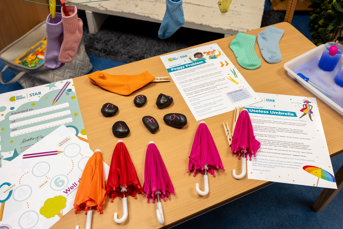
Samantha carved out time in her schedule and went to run the kit box activities with nursery children in small groups once a week. The activities included Peggy Problem, testing the strength of pegs by putting different objects in socks pegged to a line, and Sniffly Sneezes – experimenting with materials to discover which is the most absorbent.
“They really associated [working on CREST activities] with doing something really fun”, said Samantha, “which was really lovely”.
They were just really engaged in everything that we did.
Samantha mostly worked with the children in small groups, but sometimes ran CREST with whole classes, which was an opportunity for outdoor learning in the forest school.
[The forest school] worked nicely to be able to take them all at the same time.
“Building that curiosity from such a young age”
It can’t be overestimated how important early years education is, it really does set the stage for all the learning to come. (Read our blog early years education).
Star CREST challenges can be perfect resources to help children start developing their scientific aptitude, before they even know what science is. Samantha told us:
I just think that it creates such a good foundation - building that curiosity from such a young age, and being able to develop their language skills.
The activities are all about learning through play; they’re designed to be colourful, fun and intriguing:
The resources in the box are just absolutely beautiful and the children couldn't wait to get hands on with them…they genuinely thought they were just coming to play and have fun.
Being tactile and hands-on with learning is something children are getting fewer chances to do, Samantha told us. “We've got lots of issues with overuse of technology.”
She continued:
Even more so in school, we really need to be providing these opportunities for children to explore all of these things in the world around them.
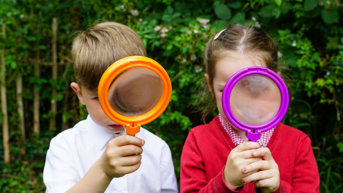
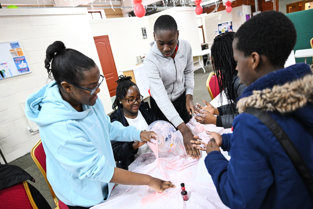
Children at Riverside Primary School taking part
“You know you're getting a really high quality activity”
While running practical experiments with children can be hugely beneficial, they also usually require a lot of planning and preparation time that teachers often don’t have.
The CREST Star Kit Box solves this problem - teachers can just open the box and go.
“I wouldn't advocate just picking it up without looking at it prior”, Samantha said, “but you know you're getting a really high quality activity that you can just grab out of the box.”
All the thinking has been done for you, so you know that you're going to get that high quality engagement from the children. So that's definitely a big selling point.
As well as saving time, a ready-to-go activity can also help teachers who might not feel confident with this type of lesson. This can be an issue, Samantha explained.
I think practical science is something that teachers are a bit scared of, for classroom organisation and the behaviour management in the lesson. And I think if you're lacking in confidence, you're going to steer away from practical science.
She continued:
[Using a CREST Kit Box] might help people be a bit more willing to just give something a go. It's all there for you. The resources are there. The planning is there. Take your box and just go and have fun with it.
“Modelling to the parents the sorts of conversations that you can have”
While classroom learning is important, family support really elevates children’s education.
Samantha used the CREST Kit Box sessions as an opportunity to involve families; they were invited to join in when activities were run outdoors at the forest school.
She also used the activities as part of the open mornings for the reception class, to show the parents the sort of learning the children would be taking part in.
The engagement from the parents and the children was brilliant and it was just such a lovely atmosphere.
Supporting parents/carers to be part of their children’s education can make a big difference for those who are keen to engage, but haven’t been given the tools. Samantha said:
It was great being able to model to the parents the sorts of conversations that you can have, even on their walk to school. Just stopping and noticing, particularly at the moment, the new signs of spring that are coming along.
She continued:
I think hopefully some of [the parents] will be a bit more keen to do things outside…like the bug hunting. The children were ecstatic that they found a spider, and that's so easy to repeat at home, in the garden or on a walk to school.
“it was just an incredible opportunity for confidence building, language development”
Samantha usually teaches a Year 5 class and knows how much they love outdoor learning, so she decided to involve them in the CREST Kit Box forest school sessions.
She trained up some of her pupils to run the activities with the nursery children, “and oh, they just absolutely loved it”.
They were so focused, so attentive. I had one boy in particular who has ADHD and really struggles in the classroom. The work that he did with these children, carrying out the activities was just amazing.
Samantha found that pairing different aged children up worked well for both groups.
From both ends of the spectrum, it was just incredible opportunity for confidence building, language development.
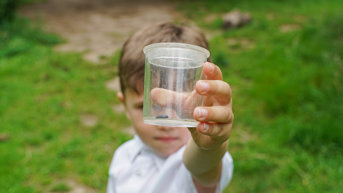
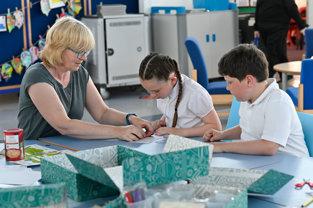
A pupil at Riverside Primary School taking part
“There wasn't one child that couldn't access what we were doing”
A key benefit of practical science is that it can be inclusive of children with SEND who might find theoretical teaching doesn’t give them space to flourish and fulfil their potential.
Samantha noticed this during the CREST sessions, that all the children got involved.
In nursery, there wasn't one child that couldn't access what we were doing. Yes, there were children who…had more understanding at the end of it, but there wasn't anybody that couldn't get involved in their own way.
She added:
[The children with SEND] weren't separated or needing to have anything different to anybody else. They just took something slightly different out of it and had a lovely time.
“For creating that enthusiasm from teachers and children, they are absolutely amazing”
The resources in the kit boxes can be kept and used over again, which Samantha has already done:
I keep them in my cupboard so that they don't get lost in the school. We've used them again with our nursery children this year…I think for creating that enthusiasm from teachers and children, they are absolutely amazing.
Samantha shared that teaching can become heavy with “expectations and the assessments”, but that it’s important not to lose the fun and enjoyment in science.
I think it's really important to just bring that level of fun and creativity. And I think the boxes and the activity ideas really give the opportunity for that.
Recently we also published a short evaluation report of this pilot project, which includes lots of brilliant stats and quotes from other participating teachers about the experience of using the boxes.